
Table of Contents
Introduction:
Good news often comes wrapped in technical language—but let me unpack it for you. Today, India’s GST (Goods and Services Tax) system received its biggest makeover in years. Picture this: only two main tax rates—5% and 18%—replacing the messy old structure, plus a bold 40% on luxury or harmful items. That’s it.
But why should you care, and how did this happen? Let’s get into the scoop in it details :
1. GST Simplified: Welcome to the Two-Slab Structure
Before today, It had four main tiers—5%, 12%, 18%, 28%, and some messy cesses on top. It left many people scratching their heads:
Which tax applies to what?
Why is toothpaste taxed differently than soap?
And why did people debate popcorn rates a few years ago?
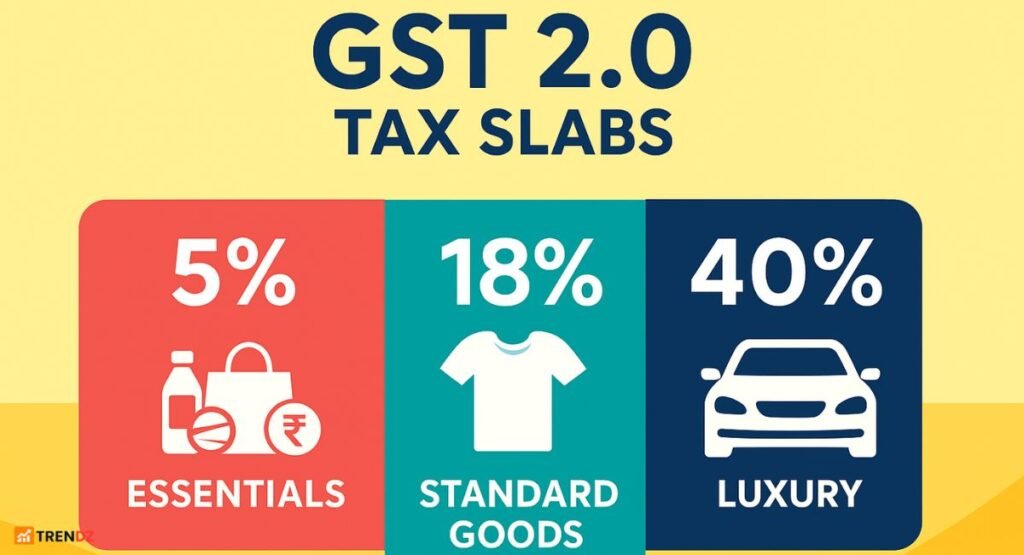
Now, thanks to the 56th GST Council meeting, the structure is clear:
5% for everyday essentials (think: toothpaste, soaps, medicines, life-saving items)
18% for standard goods (like TVs, appliances, small cars, cement)
A special 40% slab on “sin goods” (luxury or harmful items like tobacco, big cars, and alcoholic beverages)
2. Why This GST Is a Big Deal ?
This isn’t just zero or lower values—it’s a shift with real meaning.
Everyday impact: Lower rates on essentials like packaged milk, insurance, and even stationery mean more money stays in your pocket.
Economic boost: Easier, cheaper purchases may stir a pre-festive spending surge—great news for small traders and shoppers alike.
Simplified compliance: Whether you run a store or just do online shopping, fewer slabs = less confusion.
3. What Moves to 5% or Gets Exempted?
Here’s where things get personal:
Essentials: Soap, shampoo, toothpaste, hair oil, bicycle, kitchenware, beauty and wellness services like salons—all now at 5%.
Food staples: Paneer, UHT milk, roti flour, dry fruits, biscuits, cornflakes—dropped from 18% to 5%. Some basic breads even move to nil !
Insurance & healthcare: Life & health insurance now completely GST exempt, while critical drugs fall to nil and others to 5%.
Education & wellness gear: Notebooks, pencils, exercise books—zero GST. Salon, gym, and yoga services—all now 5% .
This is a sweet relief for frequent shoppers and families managing tight budgets.
4. What’s Now Under 18%?
These are things you need, but not everyday basics:
Home appliances: ACs, TVs, dishwashers, etc., down from 28% to 18%.
Small vehicles: Motorcycles under 350cc, small hybrid cars—now 18% instead of 28%. Electric vehicles stay at 5%.
Construction inputs: Cement, auto components, small machinery—most drop from 28% or 18% to 18% or 5%.
5. What’s Now in the 40% “Sin Goods” Slab?
As affordability improves, some things get more expensive by choice. The 40% targets:
Tobacco, gutkha, packaged cigarettes
Yachts, luxury cars, high-end watches, entertainment like casinos
Some carbonated drinks and items previously under cess direction
This isn’t about targeting anyone—it’s about balancing convenience with responsibility, encouraging healthier choices.
6. When Does the Anil (Oops—GST) 2.0 Kicks In?
Circle the date—September 22, 2025. That’s when Navratri begins and the new GST slabs come alive. Everything—except tobacco and similar items—switches to the new rates.
Why this date? Because festive spending peaks then, and these changes are meant to help you shop smarter—not feel taxed more.
7. Winners, Losers & What’s Ahead
Who Gains?
Common citizens—lower tax on essentials
Entrepreneurs & small retailers—simpler structure and better demand
Health & agro sectors—cheaper equipment, better margins
Who Pays More?
Users of luxury goods or sin products
Some soft-drink fans may notice a higher GST on aerated drinks
Despite potential revenue losses (~₹48,000 crore or ~$5.5B), the GST Council believes these changes revive spending and economic energy.
8. How This Affects You—Person to Person
Let’s drop the technical tone and think relatable:
Mom can now buy shampoo and toothpaste with ₹10–20 saved neatly.
Electricians might see more cement/business as housing becomes cheaper.
Homebuyers could relax more knowing renovation costs dip.
Imagine cheaper restaurant meals and more affordable fitness classes.
This is what reform should feel like—simple savings with big heart.
9. FAQs – Your GST Questions, Answered
Q: Are essentials now GST-free?
Not all. Many items like fresh bread, paneer, and medicines have nil or 5% , but some still carry small taxes.
Q: When do changes take effect?
September 22, 2025 — first day of Navratri.
Q: Is life insurance taxed now?
Nope, life and health insurance are fully exempt from GST.
Q: Are electronics cheaper?
ACs, dishwashers, TVs are now taxed at 18%, down from 28%. Phones and laptops remain at 18%.
Q: Why is GST up on soft drinks?
To discourage consumption of unhealthy goods, carbonated beverages are now taxed at 40%.
Conclusion: A GST Reset Full of Hope
Think of this as GST 2.0 — more than just a policy tweak, it’s a step toward economic empathy. Lower taxes on essentials, better clarity, and selective high taxes where they count.
India’s GST journey is now about balance, simplicity, and fairness. And for you, it means a better price, less tax confusion, and hopefully more joy in everyday spending.
Let’s shop, plan, and celebrate smarter together.
More:

What’s up guys? Trying out medusagamevn. The themes are interesting. Could be a fun time killer. See what you think at medusagamevn
Just started playing on ww7game, and I’m liking what I see. Graphics are slick, the gameplays’ smooth, and it’s easy enough to get the hang of. I recommended checking out ww7game
Looking for a new casino site and decided to give hh88casino a try. The bonuses are pretty good, and they have a decent selection of table games. Hope my luck turns around, gonna test it this week. hh88casino seems promising!
Placed a few bets on hh88bet last night and had a pretty good run. Odds seem fair, and the site is laid out well. Worth a try if you’re into sports betting. Check out hh88bet!