
Table of Contents
Introduction
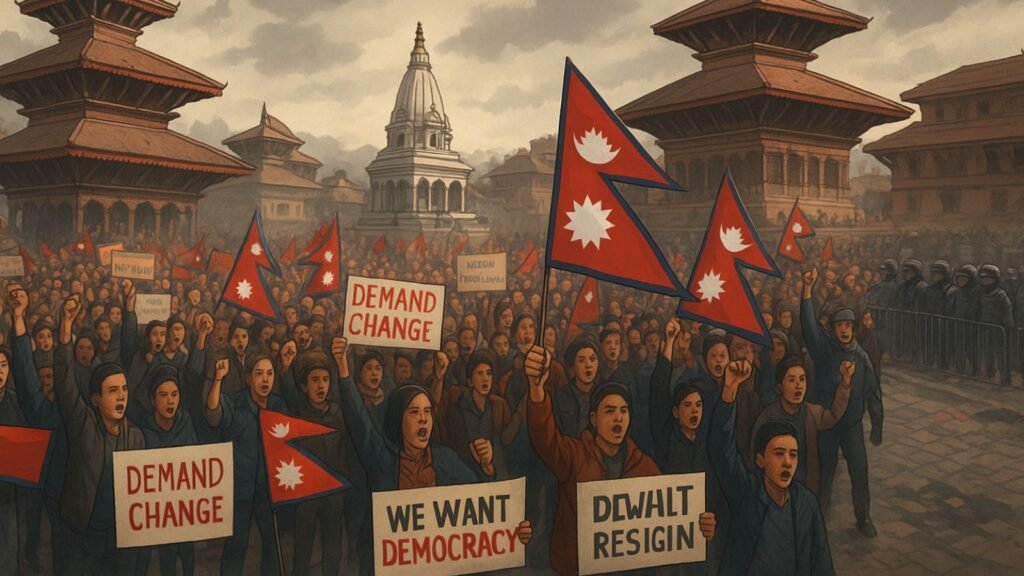
Sometimes, the roar of young voices shakes the very foundations of a nation. In Nepal, that roar has turned into shockwaves across the Himalayas.
On September 9, 2025, Prime Minister Khadga Prasad (KP) Sharma Oli resigned after days of violent, youth-led protests shook Kathmandu and other cities. What started as outrage over a social media ban snowballed into a broader uprising against corruption, government inefficiency, and an aging political class that many young Nepalis feel no longer represents them.
The result? A nation in turmoil, a leader forced out, and a generation demanding change—louder than ever before.
1. The Spark: Social Media Ban and Rising Frustration
The protests were not born overnight. Anger had been simmering for years, especially among Gen Z, a generation raised in the digital era, connected to the world through their smartphones.
The final spark came when the government ordered 26 social media platforms—including Facebook, TikTok, Instagram, and X—to register under new laws. Those that did not comply were blocked.
For older politicians, this was just another regulation. But for millions of young Nepalis, this was personal. Social media is not just entertainment—it is their window to the world, a tool for education, activism, and community. Blocking these platforms felt like stripping away their voice.
Even though the government quickly reversed the ban after backlash, the damage was done. The frustration could no longer be contained.
2. Violence on the Streets: The Deadliest Protests in Years
On September 8, protests escalated into deadly clashes. Thousands filled the streets of Kathmandu, Pokhara, and Birgunj. Students led chants, women joined marches, and ordinary citizens poured out of their homes to demand accountability.
When security forces tried to stop them, violence erupted. Police used rubber bullets, tear gas, and eventually live ammunition. By the end of the day, 19 people were dead—most of them students and young protestors.
Hospitals overflowed with the injured. Families wept outside morgues. Social media, ironically the very thing that triggered the protests, lit up with heartbreaking images of bloodied streets and students wrapped in bandages.
For many, this was the darkest day of Nepal’s democracy.
3. Flames of Anger: Retaliation Against the Political Elite
The government underestimated the fury of its people. Protestors did not stop at slogans—they went after the very symbols of power.
- The homes of top leaders, including the President and Home Minister, were attacked.
- The residence of Prime Minister Oli himself was set ablaze by enraged crowds.
- Government offices were vandalized as protestors demanded answers.
The capital fell under curfew, soldiers patrolled the streets, and airports were shut down. But instead of calming the public, these moves only deepened the anger.
4. Resignations Shake the Government
As pressure mounted, resignations began to pour in.
- On September 8, Home Minister Ramesh Lekhak resigned, saying he took “moral responsibility” for the violence.
- Several MPs followed suit, fearing backlash from their constituencies.
- Finally, on September 9, Prime Minister KP Sharma Oli stepped down, acknowledging that the situation had become “extraordinary” and that his exit was necessary to restore peace.
His resignation marked the end of an era—but also the beginning of uncertainty.
5. Gen Z: A New Force in Nepal’s Politics
This movement was not led by seasoned politicians or old party leaders. It was led by students, activists, and Gen Z youth who had grown tired of broken promises.
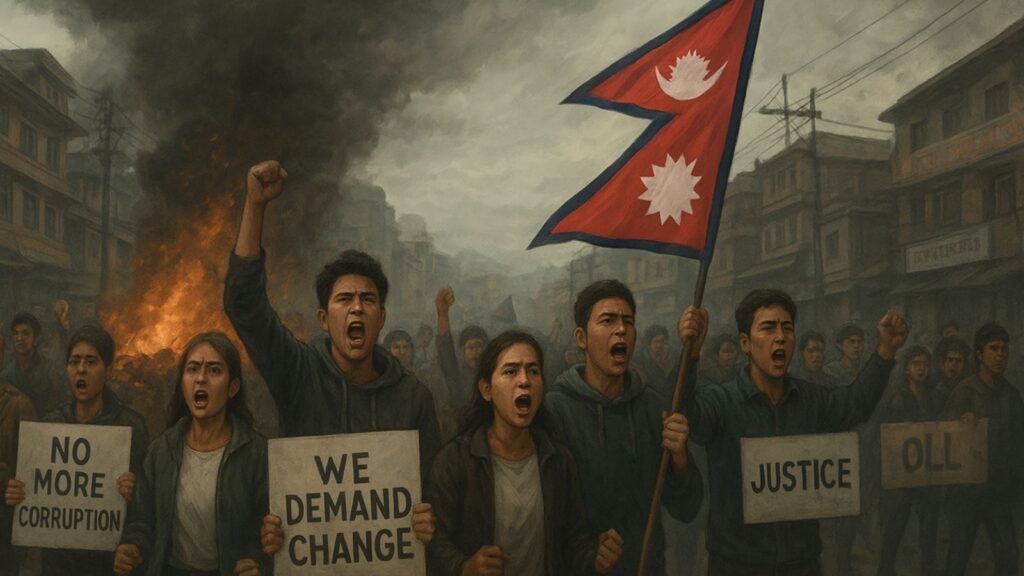
For them, the fight was not just about a social media ban. It was about decades of corruption, unemployment, and lack of opportunities. Many young people believe that their leaders are out of touch, clinging to outdated politics while the youth yearn for progress.
Their chants were simple but powerful: “Down with corruption!” and “We want a new Nepal!”
This uprising has proven one thing: Nepal’s future will be shaped not by the old guard, but by its young citizens.
6. A Nation at a Crossroads
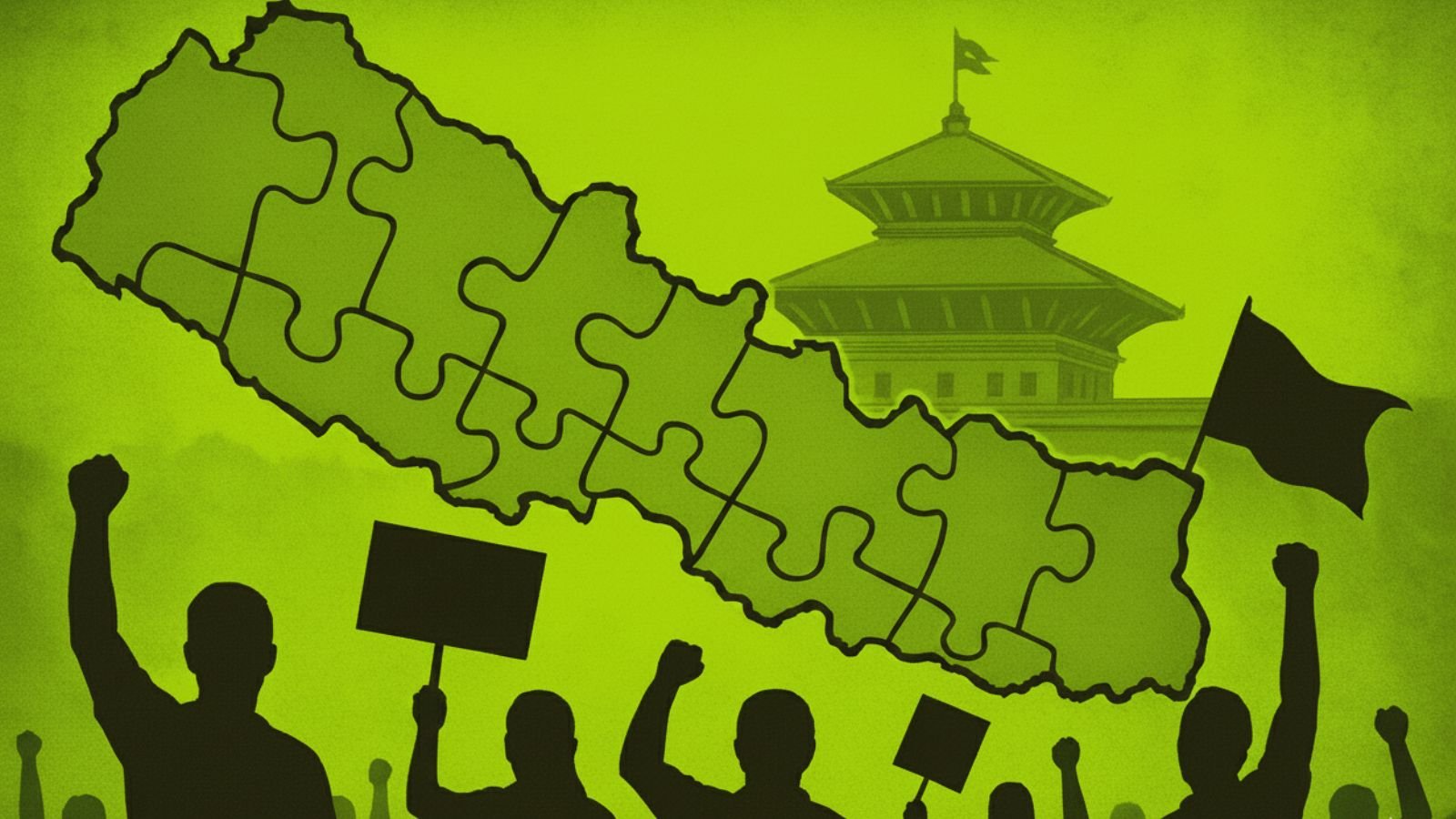
With Oli gone, Nepal now faces an uncertain road. The President has started consultations for a new government, but many protestors are calling for an interim administration with youth representation.
The question is: will the political elite make way for fresh voices, or will they attempt to cling to power?
Internationally, Nepal’s crisis has caught the attention of its neighbors. Both India and China are watching closely, given Nepal’s strategic location and economic ties. The outcome of this political transition will not only shape Nepal’s future but also ripple across South Asia.
7. The Human Toll: 19 Lives Cut Short
Behind the politics are stories of unimaginable grief.
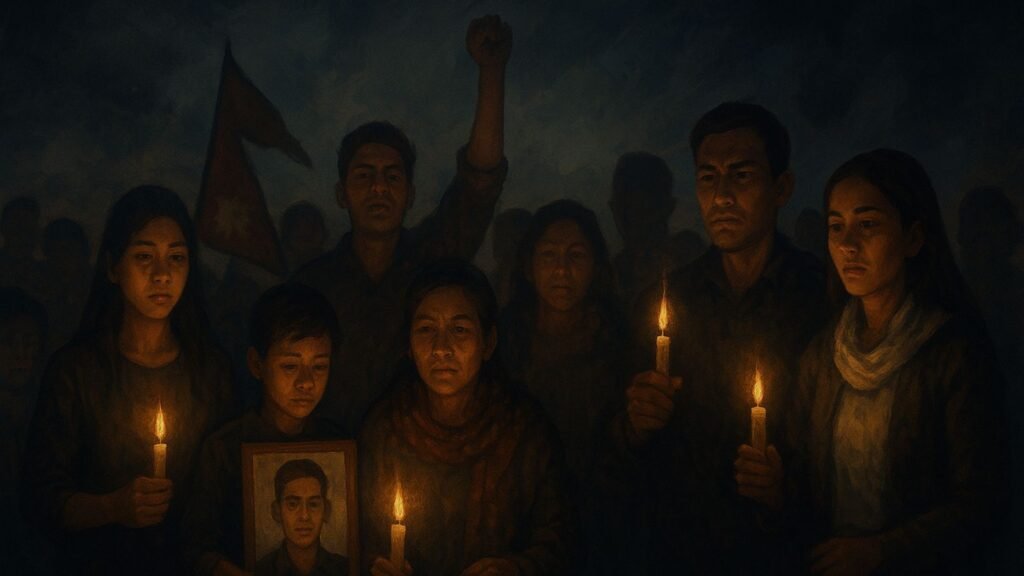
Parents who sent their children to peaceful rallies now mourn at their funerals. Hospitals remain packed with the injured. Survivors share haunting stories of bullets flying as they raised placards.
For many families, this is not just a political crisis—it’s a personal tragedy. The loss of young lives has turned this protest into a national wound that will take years to heal.
8. Why This Moment Matters
This uprising could mark a turning point in Nepal’s modern history.
- A test of democracy: Can Nepal protect freedom of speech and still regulate digital platforms?
- A generational shift: For the first time, Gen Z has forced the resignation of a sitting prime minister.
- Regional echoes: Similar protests in Bangladesh and Sri Lanka show that South Asia’s youth are no longer willing to stay silent.
Nepal is not just in crisis—it is in transition.
FAQs About Nepal’s Turmoil
Q: What triggered the protests?
A: The immediate spark was a government ban on social media platforms, but anger over corruption and lack of opportunities fueled the uprising.
Q: How many people were killed?
A: 19 people, mostly students and young activists, were killed in clashes with security forces.
Q: Did Prime Minister Oli resign because of the protests?
A: Yes, he stepped down on September 9, citing the extraordinary crisis and the need for stability.
Q: Who else resigned?
A: The Home Minister and several MPs resigned before Oli, bowing to public outrage.
Q: What happens next?
A: The President will consult political leaders to form a new government, but there are growing calls for youth-led interim leadership.
Conclusion: A Generation’s Cry for Change
Nepal’s streets have spoken louder than any ballot box.
This was not just a protest against a social media ban—it was a demand for dignity, transparency, and a better future. It was the voice of a generation that refuses to be silenced.
Prime Minister Oli may be gone, but the spirit of this uprising will echo for years. Whether Nepal chooses reform or falls back into old habits depends on what happens next.
But one truth is undeniable: a new Nepal is being born—and it is being led by its youth.
More about Nepal protest form BBC
More:

Goldenempirevn? Heard some good stuff, gonna check it out and see what the hype is all about! Maybe I’ll hit the jackpot. Check out goldenempirevn!
I tried Noobwin for the first time last night, and it wasn’t bad. Good for beginners and the interface is clean. Pretty chill overall. noobwin
Alanofishing… seems pretty neat but I think you need to have an interest in fishing haha. Check out alanofishing!
Alright, check out 655bet9. I gave it a whirl the other day. It’s got some cool games and the site’s pretty easy to get around. Might be your next go-to! Check it out at 655bet9.